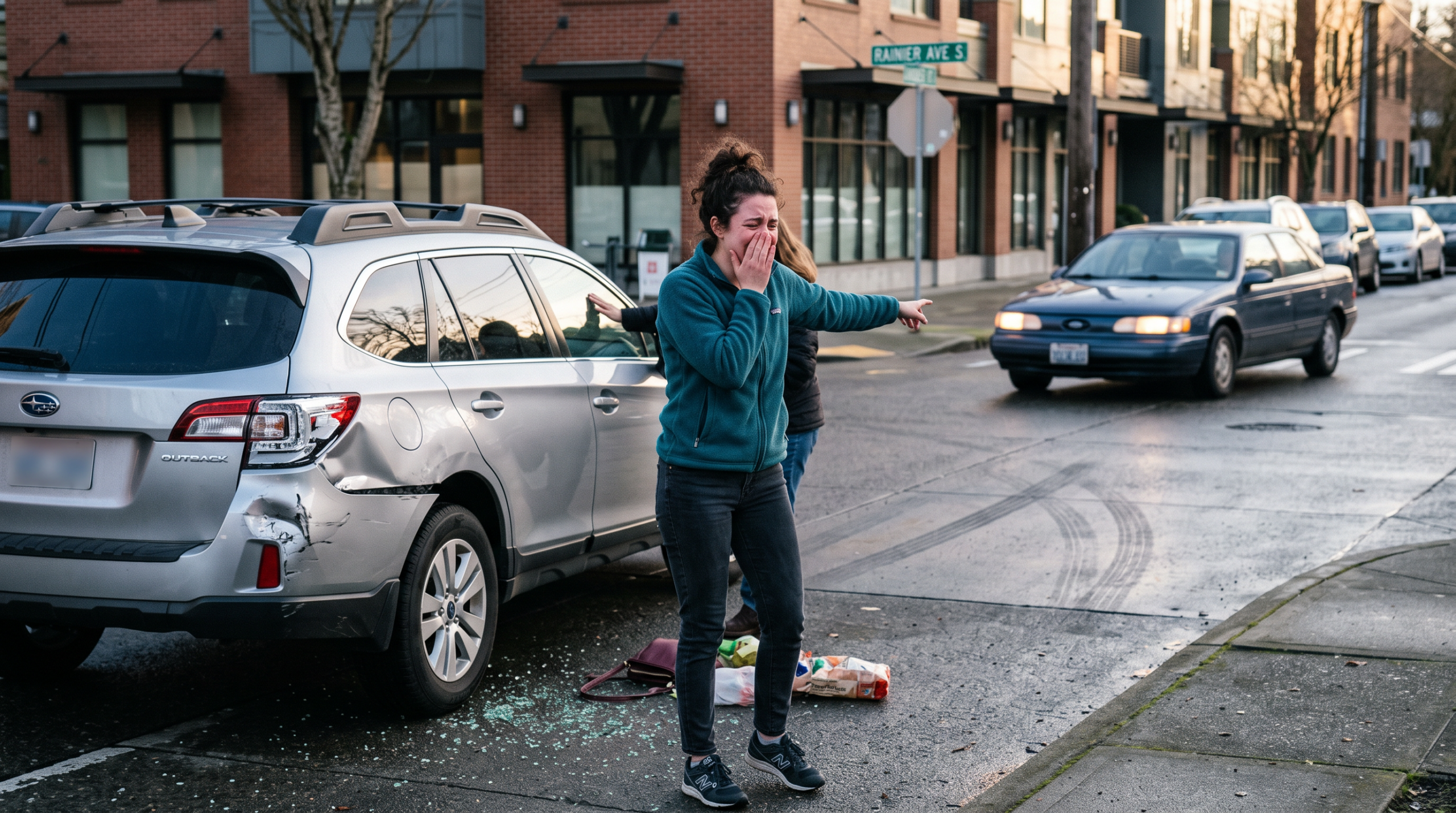
If you’re involved in a hit and run in Texas, don’t chase the other driver. Move to a safe location, call law enforcement, document the damage, look for witnesses or nearby cameras, and contact your insurance company. If the driver cannot be identified, your Uninsured Motorist Property Damage (UMPD) or collision coverage may pay for the damage, depending on your policy and the circumstances of the accident.
If your vehicle is damaged by a driver who leaves the scene, there are potentially two coverages on your auto policy that could come into play:
Collision Coverage
Collision coverage generally pays for damage to your vehicle caused by a collision, regardless of who was at fault. However, your normal collision deductible applies.
Today, many Texas drivers carry collision deductibles of $500, $1,000, $1,500, or even higher.
Uninsured Motorist Property Damage Coverage
If you purchased Uninsured/Underinsured Motorist Property Damage coverage, commonly called UMPD, a hit-and-run accident may qualify as an uninsured motorist claim when the at-fault driver cannot be identified.
One major advantage is the deductible.
According to the Texas Department of Insurance, Uninsured/Underinsured Motorist Property Damage coverage has a $250 deductible.
That can make a substantial difference.
For example, assume someone hits your parked vehicle and causes $4,000 in damage before driving away.
If the claim is handled under collision coverage with a $1,000 deductible, you would generally be responsible for the first $1,000.
If the loss qualifies for coverage under UMPD, your deductible would be $250.
Potential difference in your out-of-pocket cost: $750.
Why You Should Report a Hit and Run in Texas
After a hit-and-run, your insurance company needs to establish that another driver actually caused the damage and left the scene.
If the other driver leaves the scene, report the accident to police. The Texas Department of Insurance states that uninsured motorist coverage won’t pay for a hit-and-run accident if the accident wasn’t reported to police. Get the police report or incident number and provide it to your insurance company.
Without sufficient documentation, you may have a more difficult time establishing the circumstances surrounding the loss. Depending on your policy and insurance company, the claim could potentially need to be handled under collision coverage instead, which may mean paying your higher collision deductible.
For that reason, don’t assume that photos of the damage alone are enough.
If another vehicle hits you and leaves the scene, contact law enforcement and report the accident as soon as reasonably possible—even if your vehicle is still drivable.
What Should You Do After a Hit-and-Run?
If you’re involved in a hit-and-run accident in Texas, take these steps whenever it is safe and practical:
- Do not chase the other driver. Your safety is more important than getting their information.
- The Texas Department of Insurance recommends calling police when a driver leaves the scene and obtaining a copy of the police report for your insurer.
- Write down everything you remember. Note the vehicle’s make, model, color, license plate number or partial plate, direction of travel, and description of the driver.
- Take photos and video. Photograph your vehicle, the surrounding area, debris, skid marks, paint transfer, and anything else that may help document what occurred.
- Look for witnesses. Get names and contact information from anyone who saw the accident.
- Check for cameras. Nearby businesses, homes, parking garages, intersections, and doorbell cameras may have recorded the accident.
- Contact your insurance agent or carrier promptly. Explain that the accident was a hit-and-run and provide the police report number and any supporting evidence you’ve collected.
- Ask how the claim is being classified. If you carry UMPD coverage, ask whether the loss qualifies as an uninsured motorist property damage claim rather than a collision claim.
Does Every Texas Auto Policy Include Uninsured Motorist Coverage?
Not necessarily.
Texas insurance companies are generally required to offer Uninsured/Underinsured Motorist coverage, but a policyholder can reject the coverage in writing.
That’s one reason we encourage our clients to review their auto insurance policies before an accident occurs—not afterward.
UM/UIM coverage can provide valuable protection when the person who causes an accident either doesn’t have enough insurance, doesn’t have insurance at all, or can’t be identified following a qualifying hit-and-run accident.
One More Important Detail: Physical Contact Matters
Texas has an important requirement for hit-and-run uninsured motorist claims: there generally must be actual physical contact with the unidentified vehicle for UM/UIM coverage to apply.
For example, if an unidentified vehicle physically strikes your car and drives away, UMPD may apply.
However, if another driver cuts you off without making contact and you swerve into a guardrail, the uninsured motorist portion of your policy may not respond in the same way. Your collision coverage could still potentially apply, subject to the terms of your policy and deductible.
The Bottom Line
After a hit-and-run accident, it’s easy to focus solely on the damage to your vehicle. But taking a few additional steps at the scene can have a significant impact on your insurance claim.
Report the accident. Document everything. Get a police report or incident number whenever possible. Then contact your insurance agent or carrier and specifically ask whether the claim qualifies under your Uninsured Motorist Property Damage coverage.
With collision deductibles commonly reaching $1,000 or more, compared with the $250 Texas UMPD deductible, knowing which coverage applies can make a meaningful difference in how much you pay out of pocket.
At Barouh Insurance Agency, we believe the best time to understand your insurance coverage is before you need to use it. If you’re unsure whether your current Texas auto policy includes Uninsured/Underinsured Motorist coverage—or whether your limits are adequate—we’re happy to review your policy and explain your options. Hit-and-run protection is only one part of a properly structured personal insurance portfolio.
Adequate liability limits and an umbrella policy can also help protect your assets after a serious accident.
Coverage is subject to the terms, conditions, exclusions, limits, and endorsements of the individual insurance policy. Claim eligibility and coverage determinations are made by the insurance carrier based on the circumstances of each loss.